


Post-Operative Rehabilitation in Dhanori, Pune: Physiotherapy After Knee, Hip and Orthopaedic Surgery
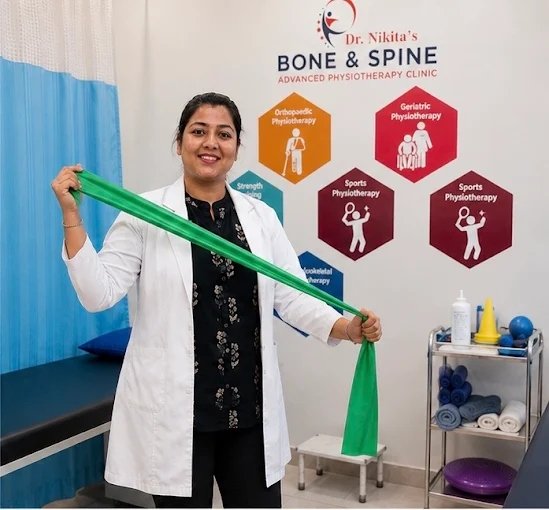
Post-operative rehabilitation is structured physiotherapy that begins after orthopaedic surgery to restore movement, strength and independence. Dr. Nikita Thool at BONE & SPINE Advanced Physiotherapy Clinic in Dhanori, Pune specialises in recovery after total knee replacement, total hip replacement and post-fracture rehabilitation.
What Happens to Your Body After Orthopaedic Surgery?
Orthopaedic surgery is successful when the physical repair is backed by effective rehabilitation. Without physiotherapy, patients often develop stiffness, muscle atrophy and scar tissue adhesions that limit long-term function. The American Academy of Orthopaedic Surgeons states that patients who undergo structured physiotherapy after knee replacement surgery regain walking function nearly twice as fast as those who rest without guidance.
Dr. Nikita Thool works alongside your orthopaedic surgeon to ensure continuity of care from the first days after surgery right through to full functional recovery.
Post-Operative Conditions Treated
| Surgery Type | Physiotherapy Helps With |
|---|---|
| Total Knee Replacement (TKR) | Regaining full knee bend, reducing swelling, rebuilding quadricep strength and walking normally |
| Total Hip Replacement (THR) | Safe movement retraining, hip precaution adherence and restoring full gait mechanics |
| Post-Fracture Rehabilitation | Recovering strength and movement in the affected limb after cast or surgical fixation has been removed |

Total Knee Replacement Recovery: Week by Week
| Week | Physiotherapy Goal | Key Exercises |
|---|---|---|
| Week 1 to 2 | Control swelling, activate quad muscles | Ankle pumps, quad sets, straight leg raises |
| Week 2 to 6 | Improve knee bend to 90 degrees | Heel slides, step-ups, short arc quads |
| Week 6 to 12 | Regain full walking and stair confidence | Cycling, balance drills, progressive walking |
| Month 3 and beyond | Return to full daily activity | Functional strength and endurance training |
Total Hip Replacement: Why Hip Precautions Matter
After a total hip replacement, your surgeon will prescribe hip precautions, which are a set of movement restrictions designed to prevent the new joint from dislocating in the early post-operative period. Dr. Nikita educates every THR patient on these precautions and teaches the correct technique for all daily activities including sitting, standing, dressing and sleeping so that recovery is both safe and progressive.
Post-Fracture Rehabilitation: Returning Strength to a Healed Bone
When a fractured bone heals, the surrounding muscles lose significant strength from disuse. The joint may also become stiff from prolonged immobilisation in a cast or splint. Post-fracture physiotherapy systematically rebuilds this lost muscle mass and joint flexibility. Most patients see meaningful functional improvement within 6 to 12 weeks of starting a structured programme.
Book Your Appointment
FAQ
Frequently Asked Questions
For most knee and hip replacement surgeries, physiotherapy begins within 24 to 48 hours after the procedure while the patient is still in hospital, and continues at a clinic like ours after discharge. Starting early is strongly linked to better outcomes.
Most patients require between 20 and 30 sessions over 3 to 6 months, with session frequency tapering as recovery progresses. The exact number depends on pre-surgical fitness, age and the complexity of the surgery.
A significant portion of recovery involves home exercises that Dr. Nikita prescribes and teaches. However, hands-on clinic sessions are essential in the early and middle phases of recovery when manual therapy, progression assessment and technique correction are needed.
Without physiotherapy, the new joint can become stiff, muscles remain weak and the risk of falls and complications increases significantly. Most orthopaedic surgeons consider physiotherapy an essential part of the surgery itself, not an optional extra.
Dr. Nikita works with each patient’s surgical discharge notes and will liaise with your orthopaedic surgeon if clarification on restrictions or progression is needed. Patients are encouraged to bring their discharge summary to the first session.